

Trading
Explore a wide range of markets with competitive pricing, deep liquidity, and advanced trading tools.
Learn More 
Platform
Trade seamlessly with TMGM's powerful platform, built for speed, precision, and a superior trading experience.
Learn More Trading Platform
Academy
Learn the fundamentals of trading with beginner-friendly resources, including guides, webinars, and market insights.
Learn More News & Analysis
Get real-time market updates and expert analysis to stay ahead of trading opportunities
Learn More News & Analysis
About
Learn what sets TMGM apart — our global presence, regulatory strength, and commitment to innovation in trading.
Learn More Why Choose TMGM
Sponsorship
Canada’s Carney says position in US trade talks will remain unchanged
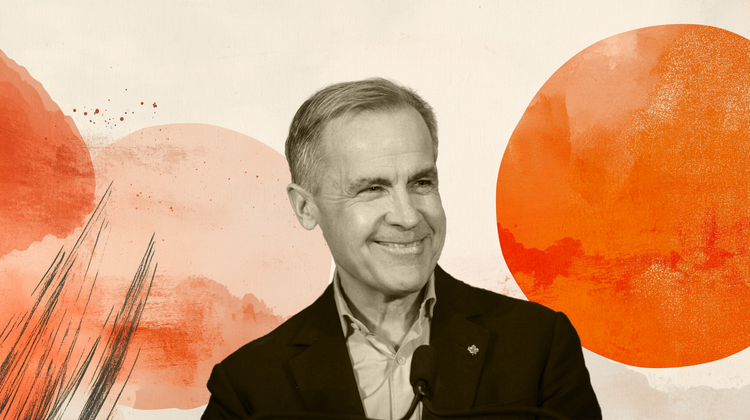
Canada’s stance in trade negotiations with the United States (US) remains unchanged, Canadian Prime Minister Mark Carney said on Monday. Any headway reflects Washington moving towards Canada’s position, he added.
Carney’s key remarks
Canada has not changed its position in trade talks with the US.
Not willing to sign US trade terms offered in August.
To the extent any progress has been made in US trade talks, it's because the US is coming closer to our position.
0.06% daily gain in USD/CAD
A 0.06% daily gain puts the USD/CAD pair at 1.4012 at the time of writing.
Canadian Dollar: Key Questions Answered
Interest rates set by the Bank of Canada (BoC), Oil prices, economic conditions, inflation and the trade balance are the principal drivers of the Canadian Dollar (CAD). Oil is Canada’s largest export, while the trade balance measures the difference between the value of its exports and imports. Investor sentiment also matters: an appetite for riskier assets (risk-on) supports the CAD, whereas a preference for safe havens represents risk-off sentiment. With the US being Canada’s largest trading partner, the strength of the US economy is another major influence on the Canadian Dollar.
By setting the interest rate at which banks lend to each other, the Bank of Canada (BoC) shapes borrowing rates across the economy and exerts considerable influence on the Canadian Dollar. Its primary objective is to keep inflation within 1-3%, raising or lowering interest rates as needed. Comparatively high rates generally support the CAD. Credit conditions can also be adjusted through quantitative easing or tightening. Easing tends to weigh on the CAD, while tightening tends to support it.
As Canada’s largest export, petroleum makes Oil prices a major influence on the Canadian Dollar, often with an immediate effect on its value. Rising Oil prices generally lift the CAD by increasing aggregate demand for the currency; falling prices tend to have the reverse effect. More expensive Oil also increases the likelihood of a trade surplus, providing further support for the CAD.
The easing of cross-border capital controls has changed inflation’s relationship with currencies in modern times. Traditionally viewed as a drag because it erodes the value of money, inflation has instead had the opposite effect. Higher inflation generally prompts central banks to raise interest rates, drawing capital from global investors seeking attractive returns. Those inflows increase demand for the domestic currency, which in Canada is the Canadian Dollar.
The Canadian Dollar can respond to macroeconomic releases that signal the economy’s health. GDP, Manufacturing and Services PMIs, employment figures and consumer sentiment surveys can all shape the CAD’s direction. Economic strength supports the currency by attracting foreign investment and potentially prompting the Bank of Canada to raise interest rates, which strengthens the Canadian Dollar. Weak economic figures, by contrast, are likely to weigh on the CAD.
POPULAR ARTICLES
16.7171: PBOC fixes USD/CNY reference rate versus 6.7162 previously2British Pound under pressure against USD as Wednesday’s UK Autumn Budget and FOMC approach3Below 1.1200: Euro retreats as traders prepare for Fed, ECB rate decisions4Near $100: WTI retreats as Middle East talks temper supply concerns5$77,000 support test awaits Bitcoin ahead of Fed decision6Iran says it and Mecca pact states agree to pursue peace7$2,355 breached: Ethereum Price Forecast as ETH falls and BitMine keeps buying8Canada’s Carney says position in US trade talks will remain unchanged9Above $4,000: gold rebounds on hopes of easing US‑Iran tensions
LIVE QUOTES


Get Started!
Sign up and access the Global Markets in less than 3 minutes

Connect With Us












The information provided on this website is of a general nature only and does not constitute personal financial advice. Before acting on any information on this website, you should consider the suitability of the information in relation to your objectives, financial situation and needs. Investing in CFDs and FX Margin Contracts carries significant risks and is not suitable for all investors. You may lose more than your initial deposit. You do not own, or have, any interest in the underlying asset. We recommend that you seek independent advice and ensure you fully understand the risks involved before trading. It is important that you read and consider the disclosure document before you acquire any product listed on the website. The information and advertisements offered on this website are not intended for use by any person in any country or jurisdiction where such use would be contrary to local laws and regulations. The Products and Services offered on this website are not intended for residents of the United States, Malaysia and Thailand.
TMGM is authorized and regulated in various jurisdictions.
Trademax Australia Limited, trading as TMGM, is regulated by the Australian Securities and Investments Commission (ASIC), AFSL no. 436416 and is located at Level 28, One International Tower, 100 Barangaroo Avenue, 2000 Sydney, NSW Australia.
Email: [email protected]
Trademax Global Limited, trading as TMGM, is authorized and regulated by the Vanuatu Financial Services Commission (VFSC), registration number 40356 and registered at 1276, Kumul Highway, Port Vila, Vanuatu, Republic of Vanuatu.
Email: [email protected]
Trademax Global Markets (SE) Limited, trading as TMGM, is authorized and regulated by the Financial Services Authority (FSA) of Seychelles, with license number SD224. The company is registered at Office No 13, Providence Estate ABIS Centre, Mahe, Seychelles.
Email: [email protected]
Trademax Global Markets (International) Pty Ltd, trading as TMGM, is authorized and regulated by the Financial Services Commission, Mauritius (FSC) with license no. GB22201012, and registered at 33, Edith Cavell Street C/o IQ EQ Fund Services (Mauritius) Ltd Port Louis, 11324 Mauritius.
Email: [email protected]
Copyright © TMGM. All rights reserved