Key Takeaways
The Gold to Oil Ratio shows how many barrels of oil one ounce of gold can buy.
Gold to Oil Ratio is used to visualize the overbought and oversold condition of Gold and Oil, allowing quick interpretation of the global market sentiment.
The ratio is useful for assessing market sentiment, and not a standalone trading indicator.
In 2026, the ratio broke down sharply from 78 to 43, then stabilized near 52, showing a major re-pricing between gold and oil.
Historically, the ratio has often stabilized around 10 to 30 barrels, so elevated readings can suggest abnormal conditions.
What is Gold to Oil Ratio
The Gold to Oil Ratio shows how many barrels of oil can be bought with the value of one ounce of gold. The mathematical formula is simply a mathematical ratio that divides the price of one ounce of gold with the price of one barrel of crude oil.
The Gold to Oil Ratio is used to show whether gold and oil are relatively overbought or oversold, helping traders quickly interpret global market sentiment.
Gold to Oil Ratio’s Current Level and Condition in 2026
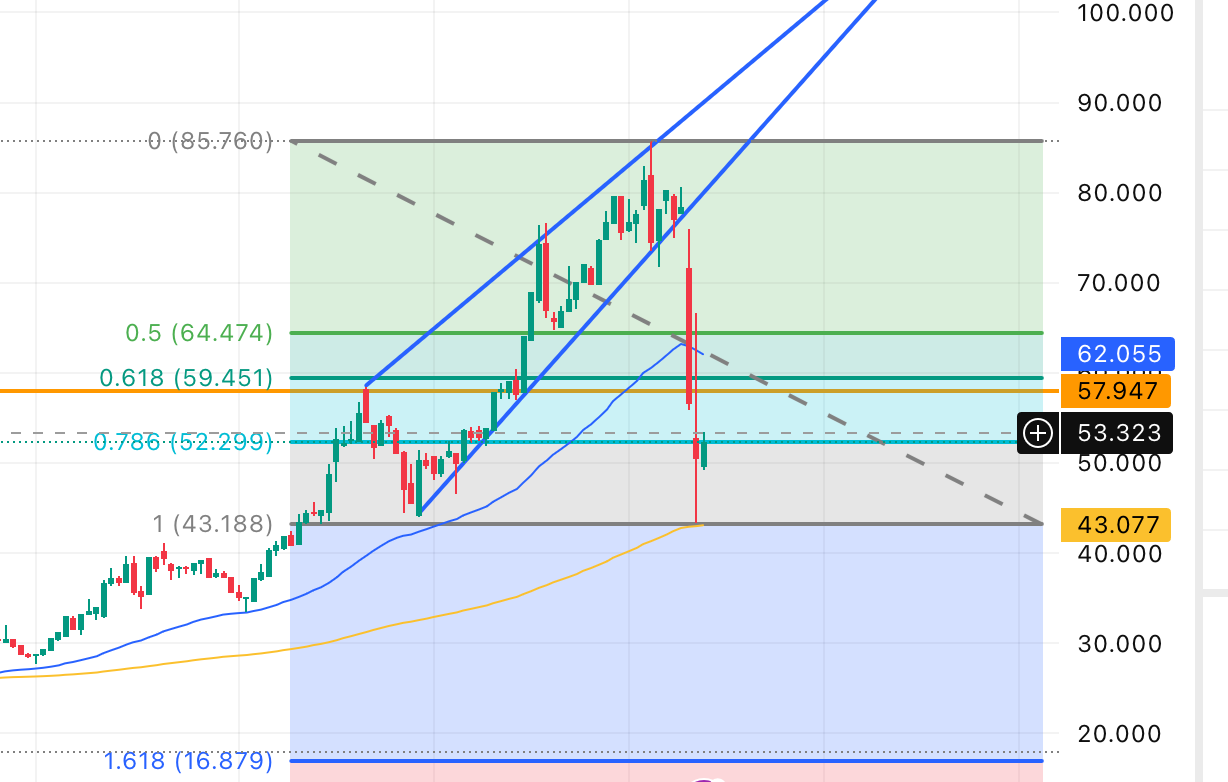
In 2026, the Gold to Oil Ratio Weekly Chart moved sharply lower breaking a near 1-year Ascending Triangle’s support line. After breaking down from around 78 barrels on the triangle’s support line, it continued lower aggressively, briefly hit 43 barrels, and then stabilized near 52 barrels.
Currently it has stabilized around 50 barrels, awaiting more news on the Iran US War affecting oil price.
How Traders Use the Gold to Oil Ratio
Traders mainly use the Gold to Oil Ratio as a macro context tool to help them decide if they should invest in Gold or invest in Oil. It helps frame whether the current relationship between gold and oil looks historically normal, compressed, or stretched.
It can also support broader market interpretation.
For example:
Gold to Oil Ratio Rising:
Gold might be overvalued (uncertainty) or oil is oversold (cheap oil).
Gold to Oil Ratio Falling:
Suggests Oil Demand or Geopolitical Risks (Iran War). Sometimes, a stable and growing economy or Gold Overselling (Risk-on, together with booming economy) can stimulate Falling Gold to Oil Ratio.
Pro Tip: Use the ratio with price structure, macro context, and supply conditions.
Historical Average
Historically, the ratio has often stabilized around 10 to 30 barrels of oil for 1 ounce of gold. That long term range is important because it suggests mean reversion might happen, meaning if the ratio swings too wildly to one side, it might be valuable to see if it will fall back down.
As of March 2026, unusual market conditions (Iran US War) have caused the Gold to Oil ratio to fall 32% in a month, signaling major economic stress related to oil supply.
Important: A high or low ratio is not a trade signal by itself. It is a relative value reference.
Why Does Gold to Oil Ratio Matter?
The Gold to Oil Ratio matters because it is more useful as an interpretation tool than as a prediction model.
Use Case 1: Capital Rotation
As two of the most important commodities for gauging global sentiment, gold and oil make this ratio especially useful for asset allocation and inflation hedging.
Similar to the Gold to Silver Ratio, it can help investors spot relative overvaluation in one asset and shift capital into the other.
Use Case 2: Market Sentiment
The Gold to Oil Ratio also helps investors gauge broader market sentiment, making it useful for decisions that rely on an understanding of global investor positioning.
It can add context to fundamental analysis of geopolitical risk, global growth, central bank policy, inflation, and other key macroeconomic themes.
Detailed Explanation:
A rising Gold to Oil Ratio usually means gold is strengthening faster than oil, or oil is falling relative to gold. This often reflects higher uncertainty in the market, as traders move into gold while demand expectations for oil weaken. In some cases, it may also suggest oil has become relatively cheap compared with gold, which can raise the possibility of a future correction if the gap becomes unusually wide.
A falling Gold to Oil Ratio usually means oil is gaining strength relative to gold, or gold is losing some of its defensive appeal. This can point to improving economic conditions, stronger industrial activity, and rising demand for oil. It may also reflect a more stable market environment, where investors are less focused on safe haven assets and more confident in growth sensitive commodities.
Could it fall further or will it rise? Gold to Oil Ratio Forecast 2026
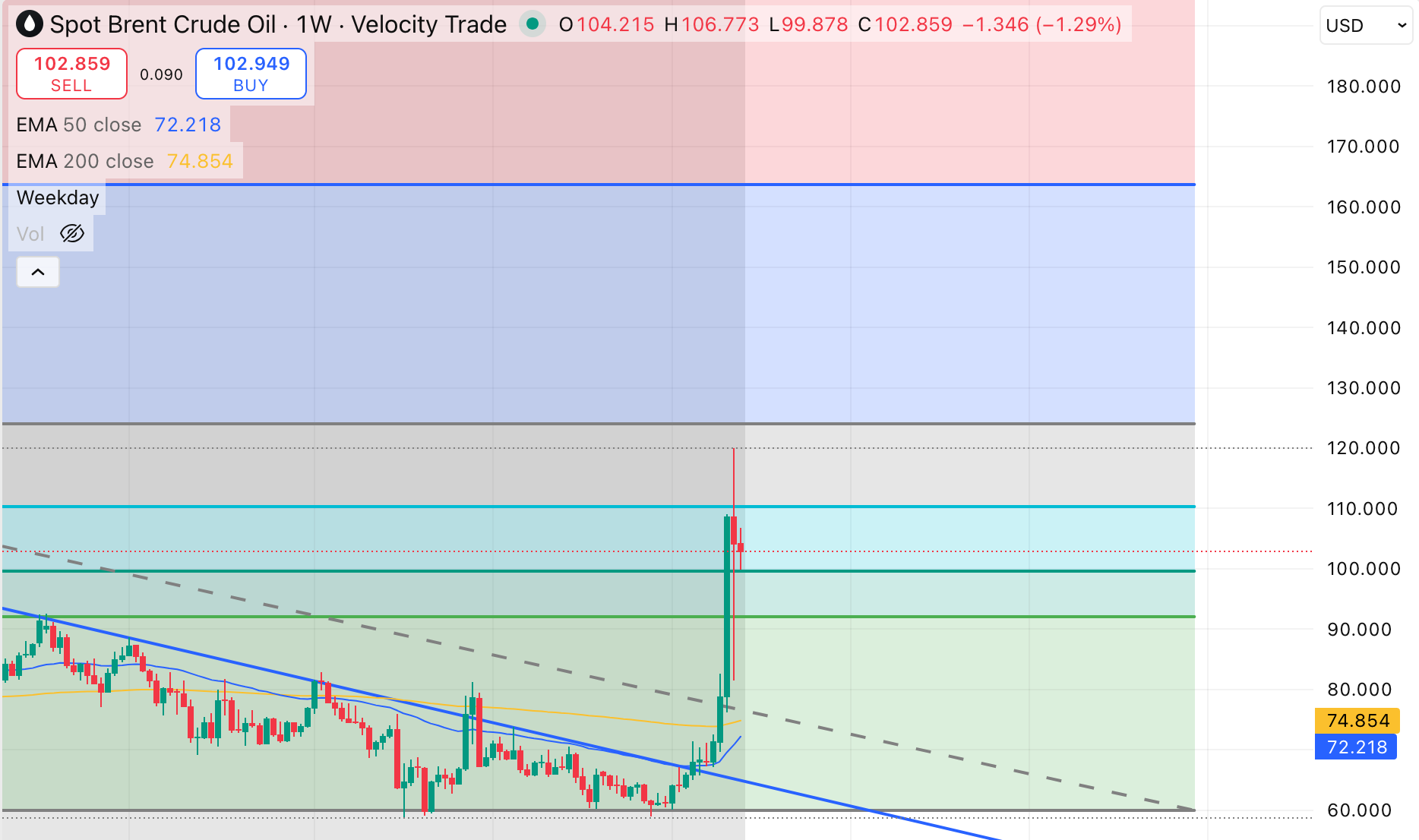
Our Technical Analysis shows that Gold has recently lost momentum in the past week, while oil has found a strong support level after cooling off, post Trump’s comment on the Iran US War.
Both Oil prices behaviour and Gold Oil Ratio showed that oil prices could see a bullish outcome in the near term. We hold a cautiously bullish case on this forecast.
Limitations of Gold to Oil Ratio
The Gold to Oil Ratio is only a mathematical relationship. It does not explain every driver behind gold or oil prices, and it should not be treated as a standalone forecast model.
Gold and oil respond to different forces. Gold reacts strongly to real yields, central bank demand, and risk aversion, while oil is more sensitive to supply disruptions, production policy, and global demand conditions.
That is why the ratio is useful as an additional layer of insight, but not as a direct predictor of future price movement.
FAQ
What does a high Gold to Oil Ratio mean?
A high Gold to Oil Ratio means one ounce of gold can buy more barrels of oil than usual. This often suggests oil is relatively weak, gold is relatively strong, or both.
Is the Gold to Oil Ratio a trading indicator?
No. The Gold to Oil Ratio is not a standalone trading indicator. It is a relative value measure that helps provide market context.
What is the historical average Gold to Oil Ratio?
Historically, the ratio has often stabilized around 10 to 30 barrels of oil for one ounce of gold. That range is commonly used as a long term reference point when assessing whether the current ratio looks stretched.
If you want, I can now make this even closer to your preferred house style by adding a more TMGM style one line takeaway and a slightly sharper analyst tone without changing the structure.