

Trading
Erkunden Sie eine breite Palette von Märkten mit wettbewerbsfähigen Preisen, tiefer Liquidität und fortschrittlichen Trading-Tools.
Mehr erfahren 
Plattform
Handeln Sie nahtlos mit TMGMs leistungsstarker Plattform, die für Geschwindigkeit, Präzision und ein überlegenes Trading-Erlebnis entwickelt wurde.
Mehr erfahren Trading-Plattform
Akademie
Lernen Sie die Grundlagen des Tradings mit anfängerfreundlichen Ressourcen, einschließlich Leitfäden, Webinaren und Markteinblicken.
Mehr erfahren Nachrichten & Analyse
Erhalten Sie Echtzeit-Markt-Updates und Expertenanalysen, um Trading-Gelegenheiten voraus zu sein
Mehr erfahren Nachrichten & Analyse
Über uns
Erfahren Sie, was TMGM auszeichnet — unsere globale Präsenz, regulatorische Stärke und unser Engagement für Innovation im Trading.
Mehr erfahren Warum TMGM wählen
Bank of England: Modest insurance tightening path – Deutsche Bank
Deutsche Bank Research’s UK economists Sanjay Raja and Maui Brennan have shifted their BoE base case from no hikes to two 25bp moves, in November and February. They argue Bank Rate is already restrictive, inflation is largely energy-driven, and second‑round effects remain limited. As long as the energy shock persists, they expect only modest ‘insurance’ tightening rather than an aggressive cycle.
Bank Rate seen as already restrictive
"We officially changed our call for the BoE. Following the September decision, we shifted our baseline from no hikes to two quarter-point rate hikes (one in November and another in February)."
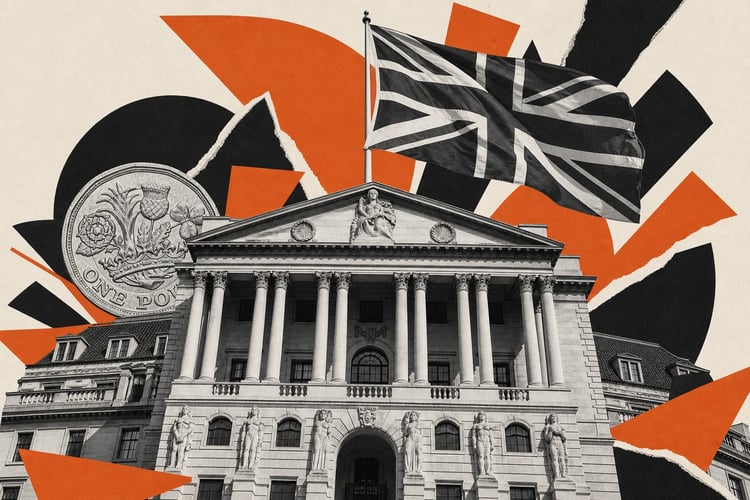
"Acknowledging the above, we do not think that the current inflation wave, as we see it, will push the MPC into an aggressive tightening cycle. For us, the MPC’s reaction function may be more consistent with a modest tightening cycle – akin to two (and no more than three) quarter-point insurance rate hikes (should energy prices follow their expected market expectations). Why do we see modest insurance-style rate hikes as our basecase?"
"The BoE has room to manoeuvre. Almost all the centrist MPC members think Bank Rate sits above their loose judgements of neutral (3-3.5%). With Bank Rate at 3.75%, Bank Rate in their eyes is already restrictive (unlike, say, the ECB which has only just taken rates to the very top end of its neutral rate range). Put simply, a slow easing cycle over the last two years has given the MPC more space to operate in the current inflationary wave with restrictive policy already leaning on inflationary pressures."
"Policy rules suggest only a modest tightening. Our Taylor Rule estimates (contemporaneous, forward-looking and first difference) point to somewhat higher estimated policy rates, lying only a bit above 4%. These changes reflect higher-than-expected outturns in GDP and a firmer outlook for inflation. However, these mechanical rules imply only a modest increase in Bank Rate - a far cry from the aggressive hiking cycle experienced in 2022."
"So, what’s changed? The MPC’s patience around the unfolding energy shock. The longer CPI tracks at uncomfortably high rates, the higher the likelihood that second-round effects build. Put simply, we think the MPC may embark on a modest tightening cycle as an insurance policy against second-round effects. That said, should we see a rapid repricing in energy markets to lower energy prices in the coming weeks, the case for hikes may start to weaken."
(This article was created with the help of an Artificial Intelligence tool and reviewed by an editor. Know more.)
BELIEBTE ARTIKEL
1Oil: Supply shock keeps prices elevated – NBC2India: Growth, liquidity and policy response – DBS3Bank of England: Modest insurance tightening path – Deutsche Bank4Japanese Yen: Turning point with BoJ shift – OCBC5Australian Dollar steadies as Middle East diplomacy takes focus6US Dollar: Hawkish fedspeak backs upside risks – ING7Australian Dollar: RBA seen hiking as inflation risks build – Standard Chartered8US ADP Employment Change 4-week average increases to 20K9Ripple Price Forecast: XRP holds $1.50 as rising exchange reserves raise caution
LIVE-KURSE


Jetzt loslegen!
Registrieren Sie sich und erhalten Sie in weniger als 3 Minuten Zugang zu den globalen Märkten

Verbinden Sie sich mit uns












Die auf dieser Website bereitgestellten Informationen sind ausschließlich allgemeiner Natur und stellen keine persönliche Finanzberatung dar. Bevor Sie auf Grundlage von Informationen auf dieser Website handeln, sollten Sie die Eignung dieser Informationen im Hinblick auf Ihre Ziele, Ihre finanzielle Situation und Ihre Bedürfnisse prüfen. Investitionen in CFDs und FX-Margin-Kontrakte sind mit erheblichen Risiken verbunden und nicht für alle Anleger geeignet. Sie können mehr als Ihre ursprüngliche Einzahlung verlieren. Sie besitzen weder das zugrunde liegende Vermögenswert noch haben Sie ein Interesse daran. Wir empfehlen Ihnen, unabhängigen Rat einzuholen und sicherzustellen, dass Sie die damit verbundenen Risiken vor dem Handel vollständig verstehen. Es ist wichtig, dass Sie das Offenlegungsdokument lesen und berücksichtigen, bevor Sie ein auf der Website aufgeführtes Produkt erwerben. Die auf dieser Website angebotenen Informationen und Werbeanzeigen sind nicht für die Nutzung durch Personen in Ländern oder Rechtsordnungen bestimmt, in denen eine solche Nutzung gegen lokale Gesetze und Vorschriften verstoßen würde. Die auf dieser Website angebotenen Produkte und Dienstleistungen sind nicht für Einwohner der Vereinigten Staaten, Malaysias und Thailands bestimmt.
TMGM ist in verschiedenen Gerichtsbarkeiten autorisiert und reguliert.
Trademax Australia Limited, handelnd als TMGM, wird von der Australian Securities and Investments Commission (ASIC) reguliert, AFSL Nr. 436416 und befindet sich in Level 28, One International Tower, 100 Barangaroo Avenue, 2000 Sydney, NSW Australien.
E-Mail: [email protected]
Trademax Global Limited, handelnd als TMGM, ist von der Vanuatu Financial Services Commission (VFSC) autorisiert und reguliert, Registrierungsnummer 40356 und registriert unter 1276, Kumul Highway, Port Vila, Vanuatu, Republik Vanuatu.
E-Mail: [email protected]
Die Trademax Global Markets (SE) Limited, tätig unter dem Namen TMGM, ist durch die Financial Services Authority (FSA) der Seychellen autorisiert und reguliert, Lizenznummer SD224. Das Unternehmen ist registriert im Büro Nr. 13, Providence Estate ABIS Centre, Mahé, Seychellen.
E-Mail: [email protected]
Trademax Global Markets (International) Pty Ltd, handelnd als TMGM, ist von der Financial Services Commission, Mauritius (FSC) autorisiert und reguliert mit der Lizenznummer GB22201012 und registriert unter 33, Edith Cavell Street C/o IQ EQ Fund Services (Mauritius) Ltd Port Louis, 11324 Mauritius.
E-Mail: [email protected]
Copyright © TMGM. Alle Rechte vorbehalten